Inline Editing & History
Edit current or past commands using emacs or vi modes, complete filenames on the fly, rebind keys, and persist command history across sessions.
 Command & Programming Language
Designed by David G. Korn, ksh unites the interactive ergonomics
of the C shell with the scripting rigor of the Bourne shell—evolving into a fast,
extensible, high-level UNIX programming language.
Combined Bourne shell scripting with C shell interactive features—and introduced emacs and vi inline editing.
First UNIX shell to offer transparent 8-bit and multibyte character set support.
Adopted by UNIX System V Release 4 and used as the basis for the IEEE POSIX 1003.2 shell standard.
Floating-point math, associative arrays, nameref, compound & discipline variables, and a C extension API.
More than a command interpreter—an interactive environment and high-level scripting language built for speed and longevity.
Designed and developed by David G. Korn at AT&T Bell Laboratories, the KornShell is an interactive command language providing access to UNIX and many other operating systems, as well as a complete, high-level programming language for prototyping and building applications.
Where the Bourne shell (Steven Bourne, Bell Labs) excelled at scripting and the C shell (Bill Joy, UC Berkeley) pioneered interactive conveniences, ksh combines the best of both—while remaining upward-compatible with Bourne shell scripts so existing scripts run without modification.
With ksh93, KornShell gained the expressive power of dedicated scripting languages like awk, perl, and tcl, often running an order of magnitude faster than sh or csh thanks to built-in utilities and runtime-loadable commands.
Edit current or past commands using emacs or vi modes, complete filenames on the fly, rebind keys, and persist command history across sessions.
Double-precision floating-point arithmetic, integer bases 2 through 64, C-style operators and precedence, and C-style for ((i=0; i<n; i++)) loops.
Indexed and string-keyed associative arrays, name references (nameref), active discipline functions, and structured compound variables.
Launch and communicate with background co-processes, target arbitrary file descriptors (read -u3), format with ANSI-C printf, and build interactive menus.
Standard utilities run in-process without forking, and new built-in commands can be dynamically loaded at runtime via a clean C API.
Extended regular-expression pattern matching, substring slicing, scoped local variables, DEBUG traps, and line-numbered execution traces.
Classic scripts straight from the book by Morris Bolsky & David Korn—download the complete archive in examples.tar.
The authoritative manuals, FAQ, and landmark publications on KornShell.
The definitive specification and guide to ksh93 by its creator.
Tutorial covering ksh93, CGI programming, and string-handling features.
The authoritative reference on dtksh and Motif graphical apps.
Accessible introduction to interactive use and shell scripting.
Covers AT&T's reusable UNIX toolkit, including ksh, sfio, and ast.
Compact desk reference for syntax, built-ins, and operators.
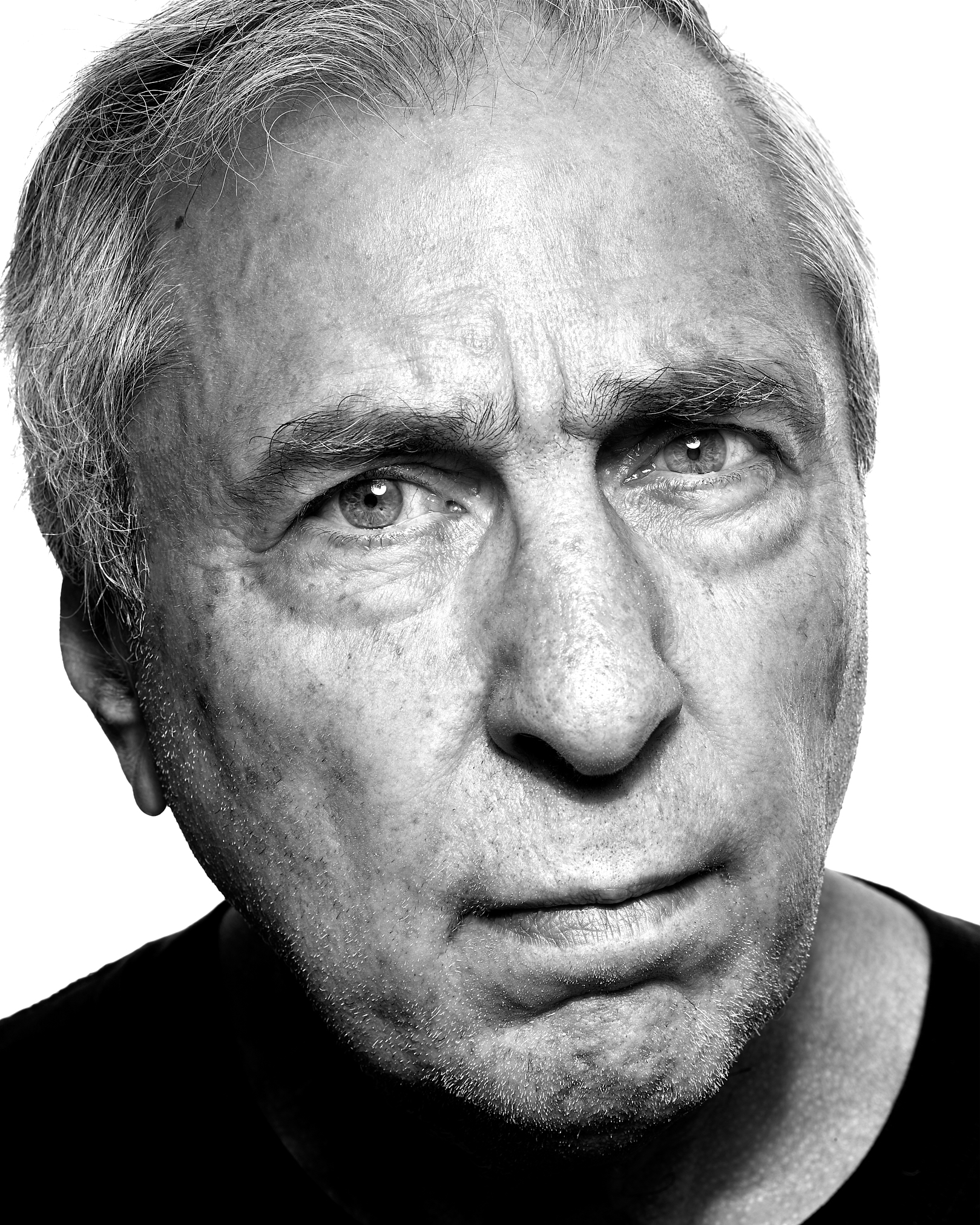
David Korn earned his B.S. in mathematics from RPI (1965) and his Ph.D. in applied mathematics from NYU's Courant Institute (1969). After working on computer simulations of transonic airfoils, he joined Bell Laboratories in 1976 and was named a Bell Labs Fellow in 1984.
In addition to creating the KornShell, his work includes UWIN, the 3-D File System, and SFIO (Safe/Fast String/File I/O). He worked at AT&T Research and Google before retiring in 2018, and resides in New York City.
When the creator of the KornShell crossed paths with the nu-metal band.


